This Bird Is Named Wrong and Doesn't Care

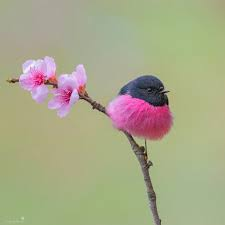
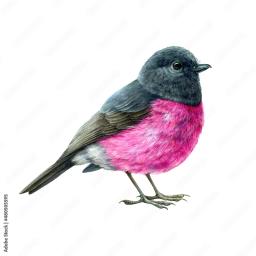
The pink robin lives in the cool, wet forests of southeastern Australia — Tasmania, Victoria, a bit of New South Wales — and weighs about 10 grams, roughly three sheets of paper. The male carries a genuinely rare color for a wild bird: a deep rose-pink breast set against a charcoal-black head and back. Pink almost never occurs naturally in feathers; when it does show up in birds, it's usually diet-driven, like flamingos and their shrimp. Here it's just built in, for no ecological reason anyone needs it to have.

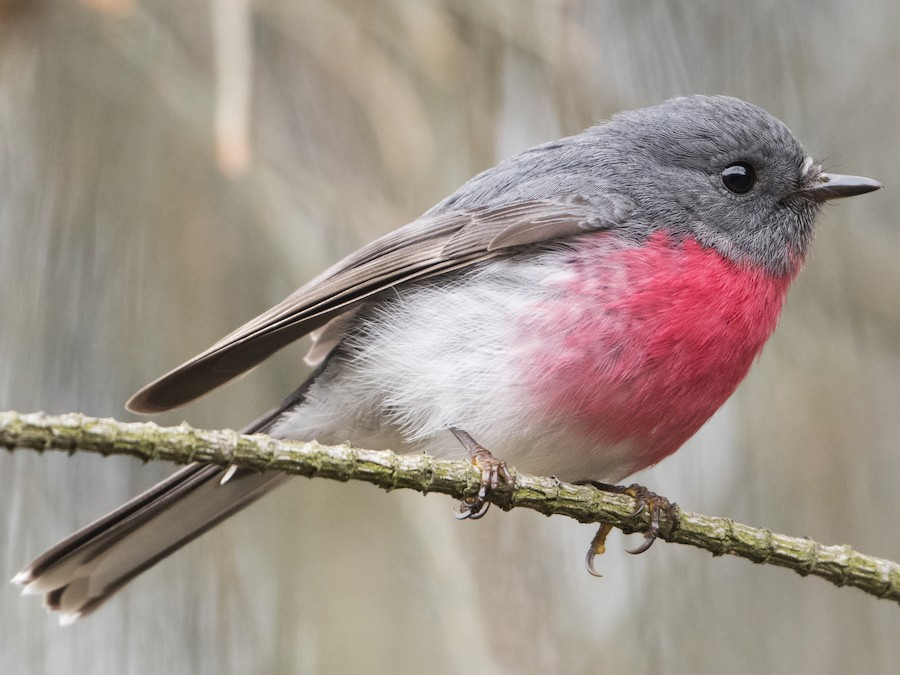
It's also not actually a robin. European colonists saw a small bird with a bright chest and reached for a familiar name, but the pink robin belongs to an entirely separate family, Petroicidae, that split off early from the lineage that produced true robins elsewhere. So the name has been quietly wrong for about two hundred years and nobody's fixed it.
A few other things worth knowing:
- The female builds the nest alone — bark, moss, and spider silk, finished with a layer of lichen so it blends into the branch almost perfectly
- Chicks fledge after just 10 to 12 days, a short window even by songbird standards
- Only the male carries the pink; the female is a modest grey-brown, which says something about where the evolutionary spending went
- It's found in a fairly narrow band of temperate forest, so spotting one is less "backyard bird" and more "you went and found it"
None of this makes it rare or endangered it's listed as Least Concern. It's just a small, quiet bird wearing a color it has no particular reason to be wearing, in a forest most people never walk into. Worth the walk if you ever happen to be in Australia.