Three Mirrors: How Ti West's X Trilogy Uses Horror to Dissect Hollywood


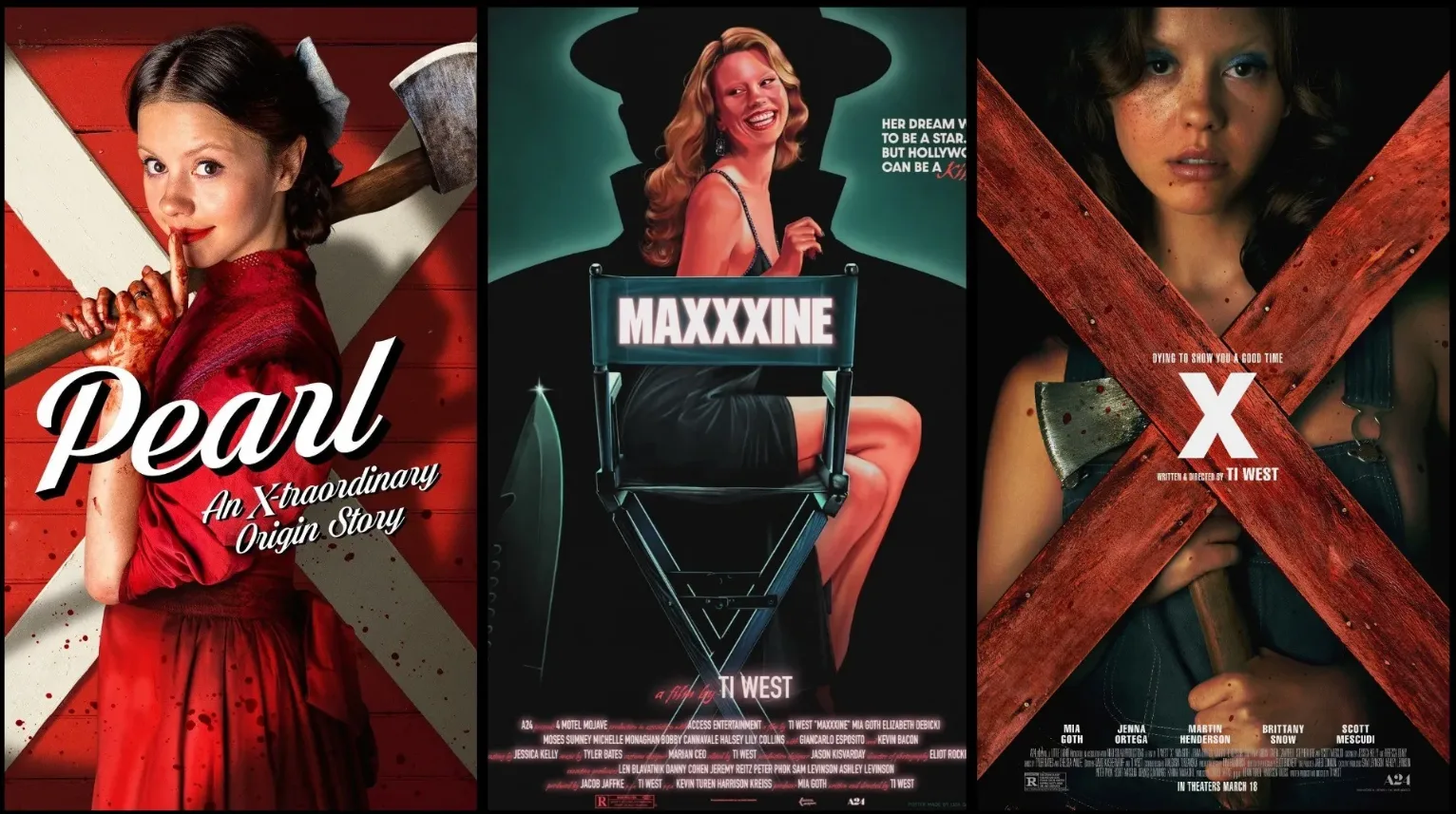
Ti West's trilogy — X, Pearl, and MaXXXine — is not just a run of soft-horror comedies with a shared lead. It's a rabbit hole. The deeper you go, the more it reveals itself as a sustained project: three films, each built as a loving pastiche of a different era of Hollywood filmmaking, and each one using horror as the instrument to interrogate the industry's relationship with fame.
What makes the trilogy remarkable isn't just that it references old movies. It's that each installment is made like the movies it's referencing — shot on the right stock, paced to the right rhythm, scored to the right register. West isn't quoting film history. He's inhabiting it.
X: The Slasher Is Born
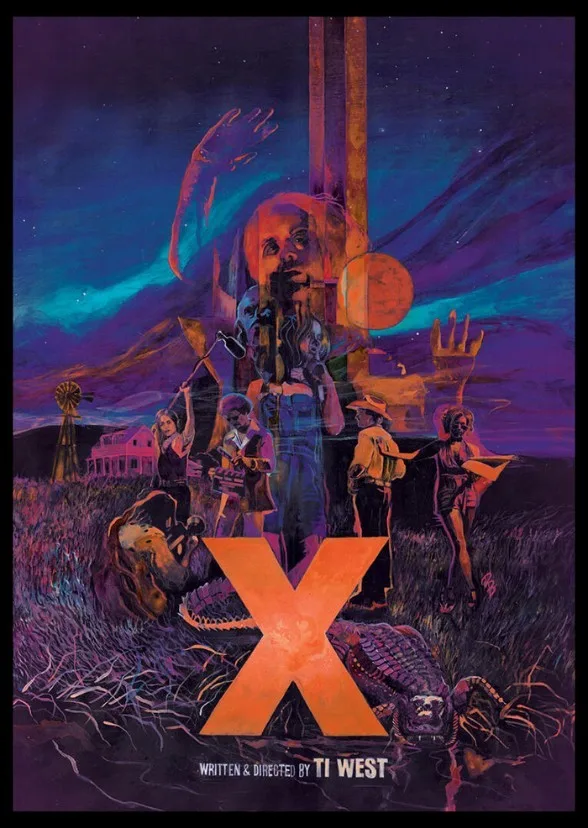
The first film, X, plants itself in the late 1970s, at the exact moment the American slasher genre was taking shape. Its clearest ancestor is The Texas Chain Saw Massacre; the film that, more than any other, set the template for the genre: a group of young people, an isolated rural property, an unseen threat that turns out to be an old, decaying menace hiding in plain sight. X wears that lineage openly, down to its grain and its dread.

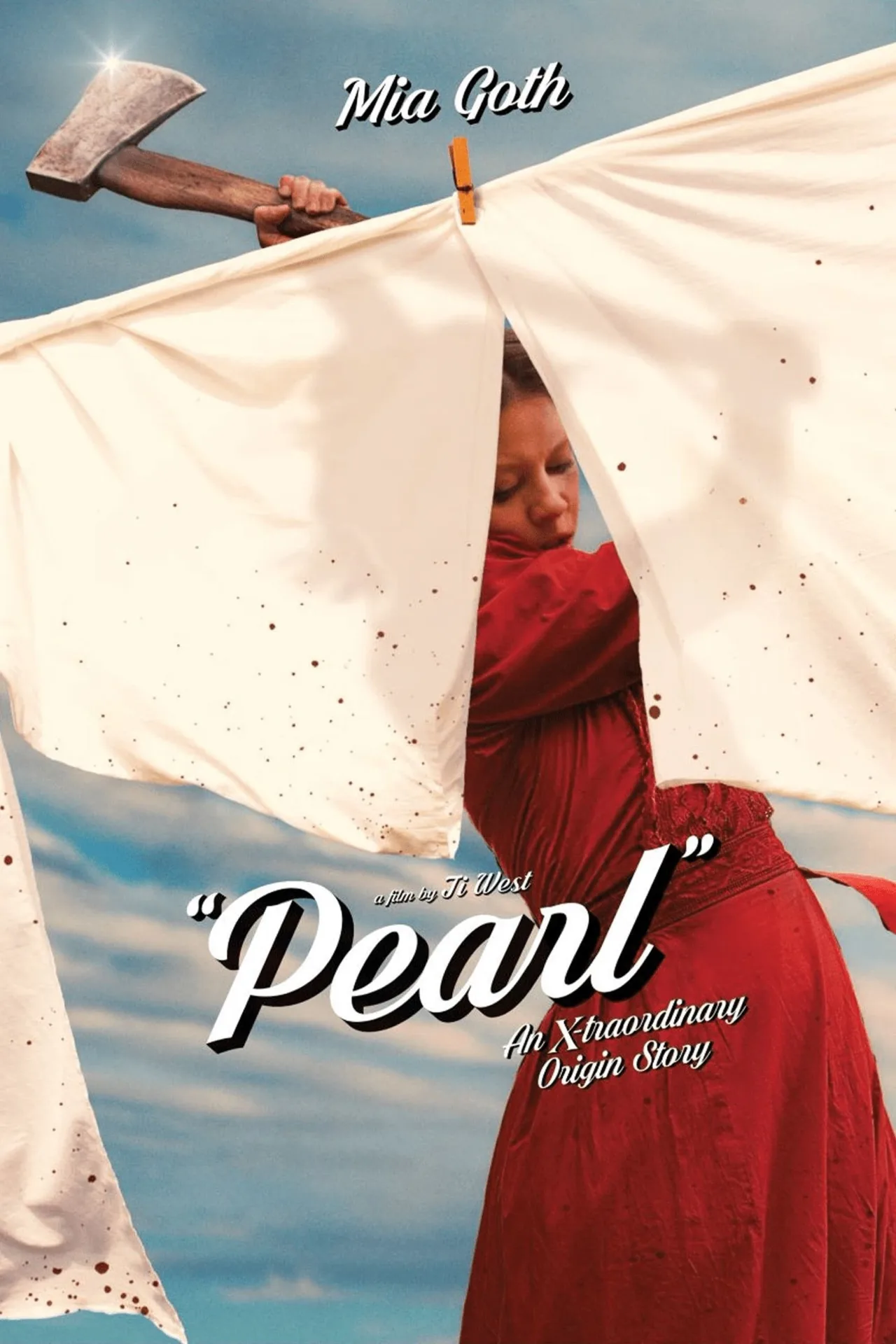
Pearl: The Origin Story in Technicolor
Pearl, the strongest film of the three, jumps back decades earlier and rebuilds itself around a completely different reference point: The Wizard of Oz. It's not a passing nod the film is shot to evoke that same saturated, theatrical color palette, and its story of a girl trapped on a farm dreaming of a bigger life follows the same emotional architecture as Dorothy's. Where Oz is wonder curdling into nostalgia, Pearl is that same longing curdling into something monstrous. It's the best entry precisely because the formal mimicry and the psychological content are doing the same work at once.

MaXXXine: Hollywood in the Neon Decade
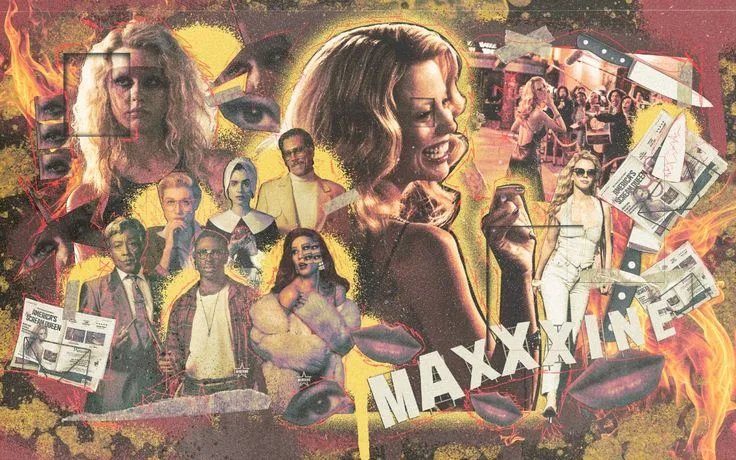
The third film moves forward again, landing in the mid-1980s. It's the loosest and least focused of the three, but it's also the most openly promiscuous with its references pulling from Chinatown's vision of a corrupt, image-obsessed Los Angeles, borrowing atmosphere from The Karate Kid, and drawing on the paranoid slasher aesthetics of the era including a direct hommage to Psycho. Where X and Pearl each commit to a single, tight reference point, MaXXXine scatters its homages across a whole decade of pop culture which is also why it's the weakest link. It gestures at more than it fully absorbs.

A Trilogy That Knows What Genre It's In
What ties the three films together, beyond craft, is how self-aware they are. The characters aren't oblivious- they know they're in a horror movie, they understand its rules, and at points they joke about them openly. That's not just a wink at the audience. It's the trilogy's real subject surfacing: how Hollywood has always looked down on horror even while depending on it.
There's a moment where a character rattles off a list of actors who started out in horror before becoming genuine stars; a small detail, but a pointed one. It says plainly what the trilogy implies throughout: horror has long been treated as the industry's back door, a place actors pass through on their way to being taken seriously, rather than a genre worth respect on its own terms.
Mia Goth, Horror's New Icon
None of this would land without Mia Goth, who anchors all three films and does genuinely remarkable work across wildly different registers — Pearl's manic, wounded ambition is a different performance entirely from Maxine's hardened survival instinct, and Goth commits fully to both. At this point she's not just a strong lead; she's established herself as horror's defining icon of this generation.
The Verdict
Taken together, the trilogy is a rare thing: a genre exercise that's also a genuine piece of film criticism, delivered through form rather than argument. If you have any interest in horror or in film history more broadly, it's worth the time — not as three separate movies, but as one long conversation Ti West is having with a century of Hollywood.